SANDEEP KUMAR [PETITIONER(S)] Vs. VINOD & ORS. [ RESPONDENT(S)]
Petition(s) for Special Leave to Appeal (C) No(s). 15393/2024
(2JB, SUDHANSHU DHULIA and AHSANUDDIN AMANULLAH JJ.)
In the case of Sandeep Kumar vs Vinod, the Supreme Court of India addressed a significant issue concerning the right of an elected candidate to assume office after winning an election. The case arose from a dispute in the state of Haryana, where the appellant, Sandeep Kumar, had been duly elected as the Sarpanch of a Gram Panchayat but was subsequently restrained from assuming office due to a dispute initiated by the respondent, Vinod, and others. Sandeep Kumar was declared the winner in a democratic election held for the position of Sarpanch of a village in Jhajjar, Haryana. After the election results, Vinod, the respondent, filed objections, questioning the legitimacy of Sandeep Kumar’s victory and seeking to disqualify him from assuming office. These objections resulted in the District Election Officer withholding the issuance of the charge of office to Sandeep Kumar, effectively preventing him from taking over as Sarpanch. The matter escalated through various administrative levels, and ultimately, the issue was brought before the Punjab and Haryana High Court. The High Court ruled in Favor of the respondent, Vinod, upholding the objections and continuing to restrain Sandeep Kumar from assuming his elected position. Aggrieved by this decision, Sandeep Kumar approached the Supreme Court, seeking relief.
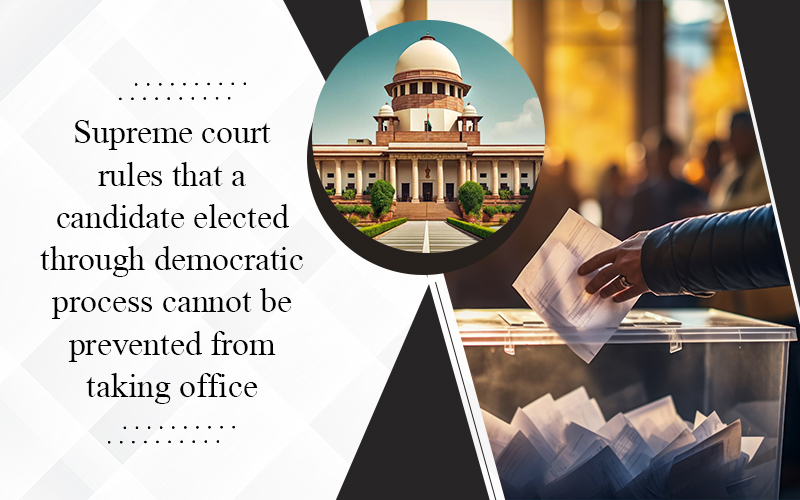
The Supreme Court of India, while hearing the appeal, addressed two key questions: (1) Whether an elected candidate can be restrained from assuming office despite being declared the winner in a fair election, and (2) Whether objections or disputes over the election process should preclude a candidate from taking charge of an elected position. The Supreme Court ruled in favour of Sandeep Kumar, emphasizing that a candidate who has been duly elected in a democratic process should not be stopped from assuming the office for which they have been chosen by the electorate. The court observed that preventing an elected candidate from taking office would undermine the democratic process and the will of the people.
The judgment further stated that any disputes or objections regarding the election or the eligibility of the candidate should be resolved through proper legal channels, such as election petitions or other mechanisms provided under election laws. However, such disputes should not be grounds to bar the elected candidate from assuming office in the interim. The Court made it clear that the remedy for any electoral grievances lies in post-election challenges, not in pre-emptively denying the victor their rightful position. This ruling reinforced the sanctity of the democratic process and upheld the rights of elected representatives. By directing the District Election Officer of Jhajjar to allow Sandeep Kumar to assume charge as the Sarpanch, the court emphasized the importance of allowing the electoral process to run its course without undue interference. The Court also underscored that withholding office from a duly elected candidate without sufficient legal grounds would not only infringe upon the rights of the candidate but also diminish the trust of the electorate in the electoral process.