SAKINA SULTANALI SUNESARA (MOMIN) [APPELLANT (S)] Vs. SHIA IMAMI ISMAILI MOMIN JAMAT SAMAJ & ORS. [RESPONDENT(S)]
CIVIL APPEAL NO(s). 6681-6682 OF 2023
(2JB, VIKRAM NATH and PRASANNA B. VARALE JJ., delivered by PRASANNA B. VARALE, J.)
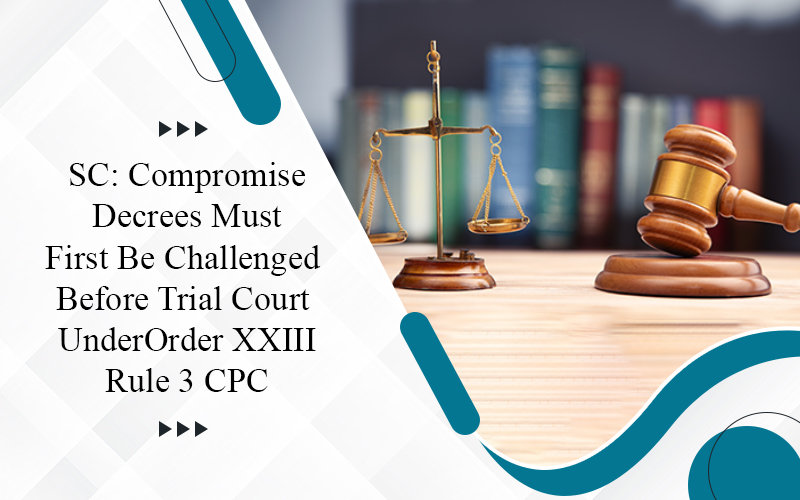
On April 28, 2025, the Supreme Court, comprising Justices Vikram Nath and Prasanna B. Varale, dismissed the appeals filed by Sakina Sultanali Sunesara against the Gujarat High Court’s decisions from 2019. The apex court reiterated that under the Civil Procedure Code (CPC), a party disputing a compromise decree must first approach the Trial Court under the proviso to Order XXIII Rule 3 CPC, rather than directly filing a First Appeal under Section 96 CPC.
The dispute arose over three parcels of non-agricultural land in Siddhpur, Gujarat, which devolved to heirs including the appellant, Sakina. In 2007, a sale agreement was executed with members of the Shia Imami Ismaili Momin Jamat. After partial payments and a cancellation in 2011, multiple transactions and civil suits ensued. Eventually, two consent decrees based on compromises dated 15 March 2016 and 17 December 2016 were passed. Sakina challenged these decrees later, citing fraud and lack of notice.
She filed Appeals from Orders before the High Court under Order XLIII Rule 1-A CPC. The High Court, relying on a Larger Bench decision, dismissed them, holding that such challenges must first be raised before the Trial Court.
Senior Advocate Huzefa Ahmadi, representing Sakina, argued that after the 1976 amendments to CPC, while the appeal from an order recording a compromise was deleted, Order XLIII Rule 1-A(2) allowed a party to challenge a compromise in a First Appeal against a decree. He contended that Section 96(3) CPC’s prohibition against appealing consent decrees does not apply when the validity of the compromise itself is disputed. Reliance was placed on precedents like Banwari Lal vs Chando Devi and Pushpa Devi Bhagat vs Rajinder Singh.
On the other hand, the respondents argued that once a compromise decree is passed, an appeal is barred by Section 96(3) CPC, and the only remedy is an application before the Trial Court. They cited Pushpa Devi Bhagat, Triloki Nath Singh, and Sree Surya Developers & Promoters v. N. Sailesh Prasad to emphasize that disputes about consent decrees must first be addressed at the Trial Court level.
The Supreme Court noted that the 1976 CPC amendments created a clear framework: disputes about compromises must first be raised before the Trial Court, and filing a fresh suit is barred by Order XXIII Rule 3-A. If the Trial Court’s decision goes against the objector, only then can a First Appeal under Section 96(1) CPC be filed.
The Court clarified that Order XLIII Rule 1-A CPC does not independently create a right to appeal a consent decree but allows raising the compromise issue during a valid First Appeal. It cited Pushpa Devi Bhagat to stress that fraud or lack of authority must be raised before the court that recorded the compromise.
The Supreme Court held that Sakina’s appeals were incompetent because she bypassed the mandatory procedure of first approaching the Trial Court. It dismissed her appeals but granted her liberty to move an application under Order XXIII Rule 3 CPC before the Trial Court, without commenting on its merits.