GEORGE P.O. [PETITIONER/ACCUSED NO.2] Vs. STATE OF KERALA [RESPONDENTS/COMPLAINANT]
CRL.MC NO. 5970 OF 2021
(THE HONOURABLE MR.JUSTICE K. BABU)
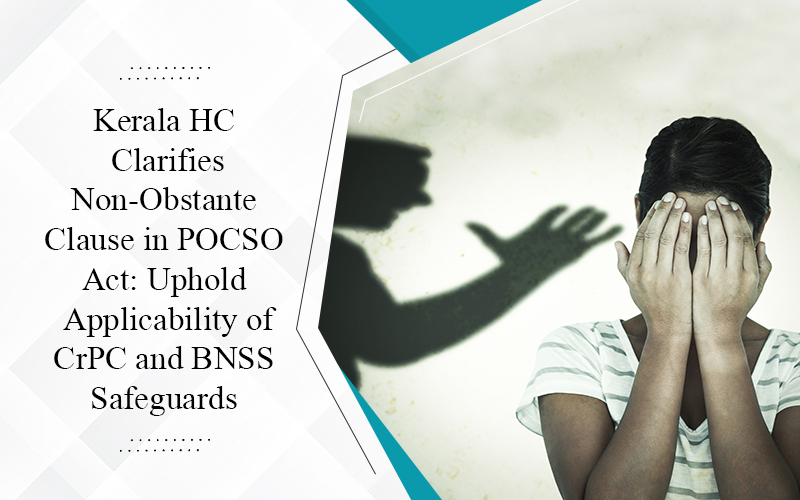
The Kerala High Court clarified the interplay between Section 19 of the Protection of Children from Sexual Offences (POCSO) Act, 2012, and Section 197 of the Criminal Procedure Code (CrPC), as well as Section 218 of the Bharatiya Nagarik Suraksha Sanhita (BNSS), 2023, in a recent judgment. It ruled that the non-obstante clause in Section 19 of the POCSO Act does not conflict with or exclude the applicability of these provisions.
This decision arose in a case where the former Chairman of the Child Welfare Committee (CWC), Thrissur, sought to quash proceedings against him in a POCSO case. The allegations pertained to his failure to report a case of sexual abuse under Section 21 read with Section 19 of the POCSO Act. Justice K. Babu, delivering the judgment, emphasized that Parliament deliberately did not include this offense as an exception to the protections granted under Section 197 of the CrPC or Section 218 of the BNSS. The Court stated that the non-obstante clause in Section 19 is limited to overlapping matters, with Section 42A of the POCSO Act further restricting its overriding effect to specific areas where it conflicts with general law.
The Court underscored that the reporting obligation under Section 19 of the POCSO Act does not relate to a person’s official character, but is a mandate to be performed in a private capacity. It also clarified that the safeguards in Section 197 of the CrPC and Section 218 of the BNSS protect public servants from frivolous legal proceedings if their actions are connected to their official duties. However, this protection does not extend to acts performed in a private capacity.
The facts of the case revealed that the petitioner was accused of failing to report a sexual abuse incident he became aware of in 2014. While the initial crime involved the sexual abuse of a minor by an auto driver, the POCSO provisions were not applied since the victim was 19 years old by the time the second crime was reported. The petitioner argued that the allegations against him were unsupported by evidence, and the Court agreed, noting that proceeding with the case would amount to an abuse of judicial process.
Drawing from legal precedents, the Court outlined key principles:
- The application of Section 197 of the CrPC or Section 218 of the BNSS depends on the specific facts of each case.
- Actions must reasonably connect to the discharge of official duties to qualify for protection.
- Acts performed in excess of official duties may still be protected, but purely private acts are not.
The judgment also highlighted the need for all state organs, particularly the police, to safeguard the interests and identity of victims in sexual offense cases. It directed the State Police Chief to ensure strict adherence to confidentiality provisions under the POCSO Act. Ultimately, the Court quashed the proceedings against the petitioner, citing a lack of evidence and underscoring the importance of balancing legal safeguards for public servants with the paramount interests of justice and victim protection.