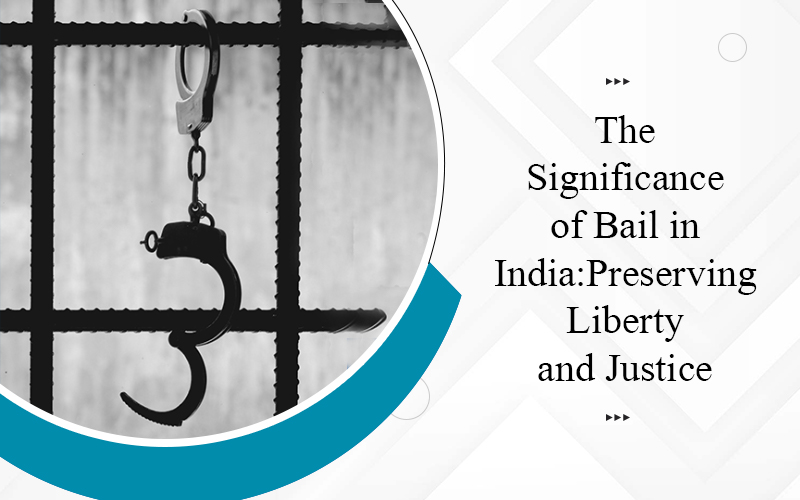
Bail is a critical feature of the Indian legal system, symbolizing a balance between an individual’s right to freedom and the state’s interest in ensuring justice. When a person is accused of a crime and taken into custody, bail offers a mechanism for temporary release under specific conditions until the trial concludes. It is important to understand that bail does not equate to an acquittal or imply that the accused is innocent. Instead, it allows the individual to await trial without being detained, upholding the principle that everyone is presumed innocent until proven guilty in a court of law.
The importance of bail is underscored by its foundational role in protecting individual liberty. Detaining individuals pre-trial without a guilty verdict would not only disrupt their lives but also impose unnecessary burdens on an already overcrowded prison system. In many cases, detention may be unnecessary, especially for minor offenses, as it disproportionately punishes those awaiting trial. Bail provides a humane alternative, allowing individuals to maintain employment, support their families, and access legal resources to prepare their defense.
The concept of bail is governed by the Criminal Procedure Code (CrPC) in India, which classifies offenses as bailable and non-bailable. For bailable offenses, bail is a matter of right, and the accused can secure release by providing a surety or paying a bond. In cases of non-bailable offenses, however, bail is at the discretion of the court. The court assesses factors like the seriousness of the offense, the likelihood of the accused fleeing, and the potential threat to the victim or society before granting bail.
India’s judicial system places a high value on the presumption of innocence. This principle ensures that an individual is not deprived of their liberty until proven guilty beyond a reasonable doubt. Bail exemplifies this presumption, as it is grounded in the idea that the accused should not be held in custody without compelling reasons. Bail hearings, therefore, play a pivotal role in balancing the accused’s freedom with the need to secure justice. In many cases, courts impose conditions on the accused, such as prohibiting them from leaving a specific area, confiscating passports, or mandating regular appearances before authorities. These measures ensure that the accused will not evade the judicial process or interfere with evidence.
Notably, the significance of bail extends beyond the legal system; it upholds human rights and safeguards personal dignity. The Supreme Court of India has repeatedly emphasized the importance of granting bail over jail, especially in cases of minor or non-violent offenses. In Hussainara Khatoon v. State of Bihar, the Court highlighted the plight of under-trial prisoners and called for reforms to make bail accessible, especially to those from financially disadvantaged backgrounds. This case underscored that bail should not become a privilege reserved for the wealthy, thus advocating for fairer bail policies in India. In essence, bail is more than just a legal tool; it is a safeguard for individual rights and personal freedom.