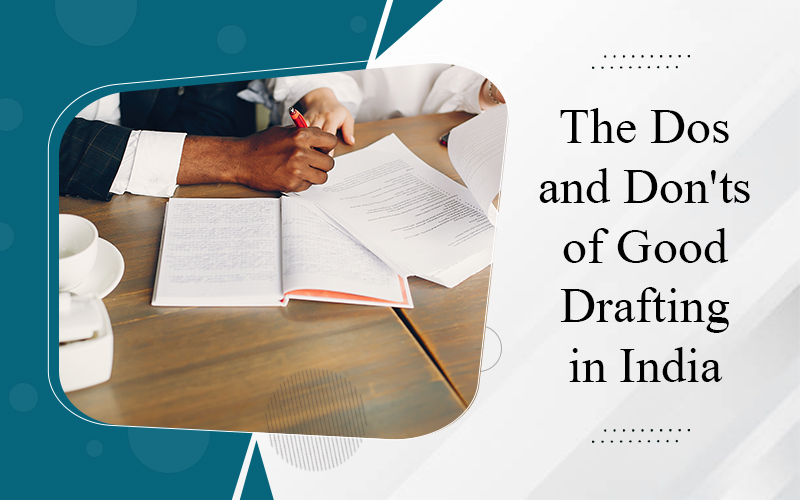
Drafting legal documents is a crucial skill for any legal professional. The quality of drafting can significantly impact the outcome of a case, the clarity of agreements, and the overall perception of a legal document’s professionalism. In India, where the legal system is a blend of various laws and traditions, effective drafting becomes even more critical. This article outlines the essential dos and don’ts of good drafting in India, providing a comprehensive guide for legal practitioners, students, and anyone involved in the creation of legal documents.
The Dos of Good Drafting
- Understand the Purpose of the Document-Before starting the drafting process, clearly understand the purpose of the document. Is it a contract, a will, a lease agreement, or a legal notice? Knowing the objective helps in framing the content accurately. Consider who will be reading the document. Tailor the language and complexity accordingly. A document intended for legal professionals can be more technical, whereas one for laypersons should be simpler.
- Be Clear and Concise-Avoid legalese and complex sentences. Clear and straightforward language ensures that the document is understandable to everyone. Every word in a legal document matters. Use precise language to avoid ambiguity and misinterpretation.
- Follow a Logical Structure-Divide the document into sections with clear headings. This makes it easier to navigate and understand.Ensure that the document flows logically from one section to another. Each paragraph should lead naturally to the next.
- Use Consistent Terminology- If specific terms are used frequently, define them at the beginning. This avoids confusion and ensures consistency. Once a term is defined, use it consistently throughout the document. Avoid using synonyms or alternative phrases.
- Be Comprehensive-Ensure that all relevant aspects of the matter are covered. This includes potential contingencies and alternative scenarios. Think about the questions the reader might have and address them in the document.
- Check for Legal Compliance-Ensure that the document complies with all relevant laws and regulations. This might include statutory requirements, court precedents, and industry standards. Laws change over time. Regularly review and update your documents to ensure ongoing compliance.
- Proofread Thoroughly-Errors can undermine the professionalism and credibility of a document. Proofread carefully to eliminate mistakes. Ensure that all facts, figures, and references are accurate and up to date.
- Seek Peer Review-Have a colleague review your document. A fresh set of eyes can catch errors and suggest improvements. Be open to constructive criticism and make necessary revisions based on feedback.
- Use Standard Formats-Using standard templates ensures consistency and adherence to accepted norms. However, customize them as needed to fit the specific context. Ensure that all essential components, such as signatures, dates, and witness statements, are included.
The Don’ts of Good Drafting
- Avoid Ambiguity-Ambiguous terms can lead to misinterpretation and disputes. Be specific and clear in your wording. Don’t assume that the reader will understand implicit meanings. Spell out everything explicitly.
- Don’t Overcomplicate-Using too much legal jargon can make the document difficult to understand. Keep it simple and straightforward. Long, convoluted sentences can confuse the reader. Break them down into shorter, more manageable sentences.
- Avoid Redundancy-Repetition can make the document unnecessarily lengthy and can confuse the reader. State each point once, clearly and concisely. Every word should add value. Remove any words or phrases that don’t contribute to the document’s purpose.
- Don’t Ignore Formatting-Inconsistent fonts, margins, and spacing can make the document look unprofessional. Use a consistent format throughout. Page numbers help the reader navigate the document easily, especially if it’s lengthy.
- Avoid Assumptions-Never assume that the reader has prior knowledge of the subject. Provide all necessary background information. Don’t assume that certain outcomes are guaranteed. Draft with contingencies and alternative scenarios in mind.
- Don’t Neglect the Client’s Input-Always consider and incorporate the client’s instructions and preferences. Their input is crucial for the document’s relevance and accuracy. Ensure that the document reflects the client’s intentions accurately. Don’t impose your own views.
- Avoid Overloading with Information-Stick to the relevant facts and issues. Including unnecessary information can distract from the main points. Be concise and to the point. Overloading the document with information can overwhelm the reader.
- Don’t Neglect Revision- Drafting is an iterative process. Don’t settle for the first draft. Revise and refine until the document is perfect. Incorporate feedback from peers and clients. Ignoring feedback can result in overlooked errors and weaknesses.
- Don’t Forget Legal Citations-Ensure that all legal citations and references are included and accurately formatted. Misquoting legal authorities can undermine the document’s credibility. Double-check all citations.
Practical Tips for Effective Legal Drafting
- Use Technology to Your Advantage-Utilize legal drafting software to automate repetitive tasks and ensure consistency. Take advantage of online legal resources for research and templates.
- Stay Updated with Legal Developments-Regularly attend workshops, webinars, and courses on legal drafting to stay updated with best practices and legal developments. Participate in professional networks and forums to share knowledge and get insights from peers.
- Develop a Personal Style-While adhering to standard practices, develop a personal style that reflects. Be willing to adapt your style to different contexts and requirements.
- Practice Regularly-The more you draft, the better you become. Practice regularly to hone your skills. Regularly seek feedback from mentors, peers, and clients to identify areas for improvement.
- Focus on the Reader’s Perspective-Consider how the reader will perceive and understand the document. This helps in making the document more reader-friendly. Think about potential questions the reader might have and address them proactively.
- Be Ethical-Always adhere to ethical standards in legal drafting. Ensure that the document is truthful and accurate. Do not include any information that could be misleading or deceptive.
Conclusion
Good drafting is an essential skill for legal professionals in India. By adhering to the dos and avoiding the don’ts outlined in this article, you can create clear, concise, and effective legal documents. Remember, the goal of legal drafting is to communicate effectively and ensure that the document serves its intended purpose. With practice, attention to detail, and a commitment to continuous improvement, you can master the art of legal drafting and enhance your professional reputation.