
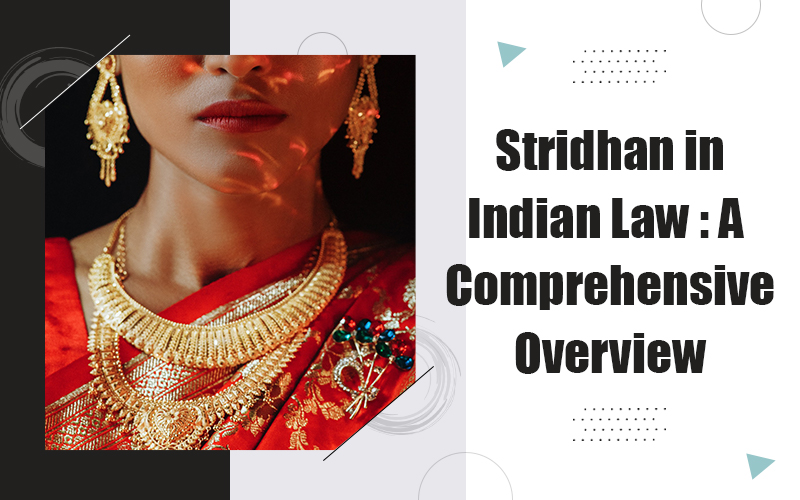
In Indian society, the concept of Stridhan holds significant cultural and legal importance. Derived from the Sanskrit words “Stri” (woman) and “Dhan” (wealth), Stridhan refers to the property or wealth that a woman receives at the time of her marriage or during her lifetime. This wealth is considered her absolute property, and she has full rights to manage, dispose of, or bequeath it as she pleases. The concept of Stridhan is deeply rooted in ancient Hindu law but has evolved over time to adapt to contemporary legal frameworks.
Historical Context of stridhan
The concept of Stridhan finds its origins in ancient Hindu texts such as the Manusmriti, Yajnavalkya Smriti, and other Dharmashastras. Traditionally, Stridhan included gifts given to a woman before, during, or after her marriage. These gifts could be in the form of jewelry, cash, property, or any other valuable assets. The idea was to provide financial security to the woman, ensuring her independence even in adverse circumstances. Ancient Hindu law classified Stridhan into two categories: Yautaka and Ayautaka. Yautaka referred to the gifts received at the time of marriage, while Ayautaka included gifts received from family members or others during her lifetime. Both categories were considered the woman’s exclusive property, and her husband or in-laws had no legal right over it.
Legal Recognition in Modern Indian Law
With the advent of the Hindu Succession Act, 1956, and other legal reforms, the concept of Stridhan was formally recognized and codified in Indian law. According to Section 14 of the Hindu Succession Act, 1956, any property possessed by a Hindu woman, whether acquired before or after the commencement of the Act, is her absolute property. This includes Stridhan, which she has full rights to enjoy, manage, and dispose of. The Supreme Court of India has consistently upheld the rights of women over their Stridhan. In the landmark case of Pratibha Rani v. Suraj Kumar (1985), the Court emphasized that Stridhan remains the woman’s absolute property, and her husband or in-laws cannot claim any right over it. The judgment further clarified that the husband or his family members have a fiduciary duty to protect the woman’s Stridhan and return it to her upon demand.
Distinction Between Stridhan and Dowry
It is essential to distinguish between Stridhan and dowry, as the two terms are often confused. While Stridhan refers to the voluntary gifts given to a woman, dowry is the property or money demanded by the groom or his family as a condition for marriage. Dowry is illegal under the Dowry Prohibition Act, 1961, and is considered a social evil, leading to various forms of harassment and violence against women. Stridhan, on the other hand, is a lawful and ethical practice aimed at empowering women. It is recognized as her exclusive property, free from any obligations or conditions.
Conclusion
Stridhan is a vital concept in Indian law, serving as a means of ensuring financial independence and security for women. It reflects the progressive recognition of women’s rights within the legal system, allowing them to exercise control over their property. However, the need for awareness and education regarding Stridhan remains crucial, as many women are still unaware of their rights. By understanding and upholding the principles of Stridhan, society can take significant steps toward empowering women and promoting gender equality in India.

One Response
Is street dhan taxable ? I’m a British citizen (previously Indian resident)and my brother wants to gift me lumpsum cash. My question is if he has to pay tax on this cash before gifting it to me ? The cash would be Indian rupees converted to British currency GBP.