Vadivel [Appellant (s)] Vs Shanthi & Ors. [Respondent(s)]
CRIMINAL APPEAL NO. OF 2024 (@ SLP Criminal No. 4360 of 2022)
(2JB, B.R. Gavai and K.V. Viswanathan JJ., delivered by K.V. Viswanathan, J.)
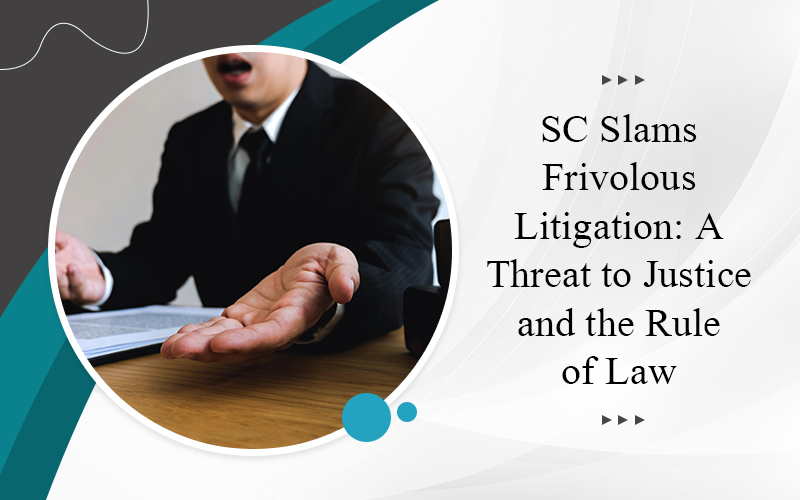
In a recent judgment, the Supreme Court of India highlighted how frivolous and vexatious legal proceedings significantly undermine the rule of law, contributing to delays in the administration of justice. A bench consisting of Justices B.R. Gavai and K.V. Viswanathan emphasized the need for courts to swiftly curb such cases to prevent unnecessary delays, which negatively affect cases that urgently require attention. Justice Viswanathan, who authored the judgment, underscored the importance of ensuring that proceedings are not prolonged without valid reasons.
The case in question revolved around a 2021 Madras High Court judgment that ordered further investigation into a 2013 murder case. The Supreme Court set aside this order, stating that it lacked justification and was a classic example of an unnecessary delay in proceedings. Justice Viswanathan pointed out that while delays may sometimes be necessary to uncover the truth, there must be a clear distinction between genuine reasons for delay and frivolous attempts to prolong cases without any legitimate grounds.
The bench stressed that the victims, the accused, and society as a whole have the right to expect justice within a reasonable timeframe. Denying timely justice, the court noted, can have severe long-term implications for the rule of law. Courts, therefore, have a critical role in safeguarding the justice system from misuse by rejecting applications or proceedings that lack merit.
The legal profession was also called upon to take responsibility for ensuring that baseless claims do not clog the judicial system. Justice Viswanathan expressed concern over the increasing number of petitions containing outrageous and unbelievable claims. He remarked that frivolous proceedings not only waste valuable court time but also exacerbate the backlog of cases, preventing those with legitimate grievances from obtaining justice.
In its ruling, the Supreme Court advocated for imposing exemplary costs on parties who initiate frivolous cases as a deterrent against such tactics. Although the court refrained from applying this measure in the current case due to the lower court’s initial acceptance of the petition, it made clear that sanctions would be appropriate in future cases to discourage vexatious litigation.
The court also addressed the specific case at hand, involving the appeal of accused K. Vadivel in a 2013 murder case. The Supreme Court criticized the High Court’s decision to order further investigation long after the trial had progressed to its final stages. The bench noted that no new evidence had emerged from the applicant, the wife of the deceased, to warrant further investigation. The court found that the High Court’s order was unjustified, especially considering the extensive investigation already conducted, which had resulted in a chargesheet being filed.
Ultimately, the Supreme Court ruled in favor of dismissing the application for further investigation and instructed that the additional chargesheet filed in 2021 would not be considered. The court also directed that the trial should be concluded, with a judgment to be delivered within eight weeks, thereby reinforcing the importance of timely justice. This ruling reinforces the court’s commitment to maintaining the integrity of the justice system by curbing frivolous litigation and ensuring that the focus remains on cases that genuinely require judicial intervention.