Introduction
Disputes as to cheque bounce are the most common type of disputes when it comes to both business and personal transactions. A cheque might get dishonored due to insufficiency of funds, disputes as to payment, financial pressure, or even due to a simple misunderstanding between the parties. Section 138 of the Negotiable Instruments Act, 1881 (herein referred to as the NI Act) treats dishonor of cheque as an offence with serious consequences. The person by whom the cheque has been issued might be punished with imprisonment, financial penalties, and long court proceedings.
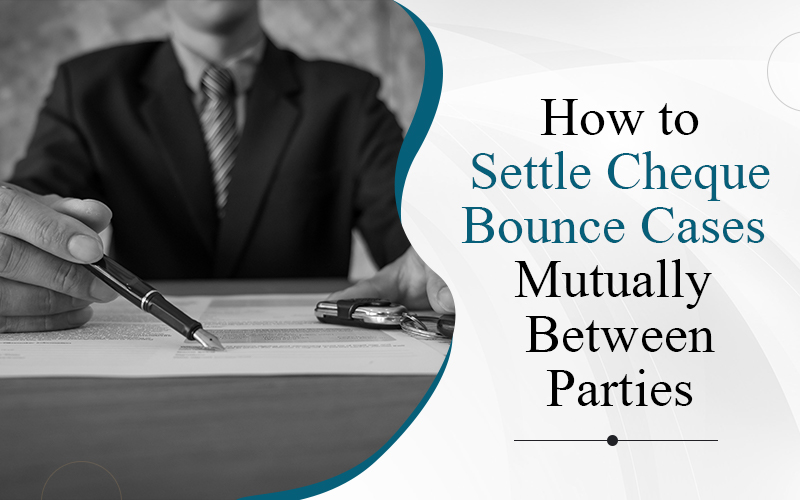
However, the Indian Judiciary strongly encourages the parties to settle the matter mutually since settlement has proved to be a far more practical approach when it comes to dispute resolution rather than being stuck in long term litigation procedures. It helps the complainant to recover the money more efficiently and also allows the accused to avoid any unnecessary legal issues.
Since cheque bounce issues usually arise from financial problems rather than any criminal intent, a resolution done mutually often works in interest of both parties.
Legal Recognition of Mutual Agreement
The law itself permits mutual agreement when it comes to cheque bounce cases. Under Section 147 of the NI Act, the offences under Section 138 are compoundable offences. This simply means that both parties can compromise and mutually settle the dispute.
The courts in India have from time to time recognized that the primary purpose of Section 138 is recovering the rightful amount and maintaining trust in commercial transactions and dealings. In Meters and Instruments Pvt. Ltd. V. Kanchan Mehta, the Supreme Court observed that this provision aims to achieve compensation rather than imposing punishment on the defaulter. If the complainant receives the amount which was due, continuing the criminal proceedings further might be of no use per se.
Due to increasing pending cheque bounce cases across the country, courts often encourage the parties to settle their disputes through mediation, Lok Adalat proceedings as well as settlement discussions. This not only reduces the burden of courts but also but also saves time, energy, and costs as to litigation for the parties involved.
Choosing the Appropriate Time to Settle
The best time to settle a cheque bounce dispute is immediately after the cheque is dishonored. Once the cheque is returned by the bank unpaid, the complainant has the option to send a legal notice within 30 days demanding the payment. The drawer is provided with 15 days to pay the amount due. If till the end of this period, the payment is cleared, the matter comes to an end their itself.
Even after the case reaches the court, parties still have complete freedom to settle the matter mutually. Settlement can take place during the pre-trial stage, evidence stage, after conviction, and even while an appeal is pending before higher court.
The Supreme Court, in Damodar S Prabhu V. Sayed Babalal H clarified that compounding offences under Section 138 can even take place at an advanced stage of litigation. Early settlement, however, is a much safer as well as beneficial option when it comes to cheque bounce cases. Delays in such matters increase legal costs, create hostility between the parties, and make negotiations more complicated.
Importance of Proper Documentation
One of the major reasons behind the failure of a settlement is the lack of proper documentation. Mostly people rely on phone calls, simple texts, or verbal assurances which leads to disputes later. Therefore, a proper written agreement is extremely important to avoid any conflicts as to the transactions made or to be made in the future.
The settlement agreement should clearly mention:
- Mode of payment
- Consequences in case of any default
- Amount of the settlement
- Important dates as to the payments to be made
- Details of the cheque
Where the payment is made in installments, every payment should be acknowledged through proper bank records or receipts in writing. This protects both parties from any future allegations or confusion.
Many cheque bounce disputes are now resolved through either mediation or Lok Adalats. Settlements before such forums help parties avoid any future complications and hold a legal value.
Conclusion
Mutual settlement when it comes to cheque bounce cases is often the fastest and most sensible solution for the parties involved. Court proceedings when it comes to Section 138 can continue for years, causing financial pressure and harm to professional relationships. A properly planned settlement helps the complainant to recover money in an efficient manner while allowing the accused to avoid criminal litigation.
However, the settlement should never be treated in a casual manner. Every promise, condition, and payment must be documented properly to ensure legal closure. A settlement can transform a dispute into a practical resolution which protects the rights and interests of both parties while avoiding unnecessary battles.