Introduction
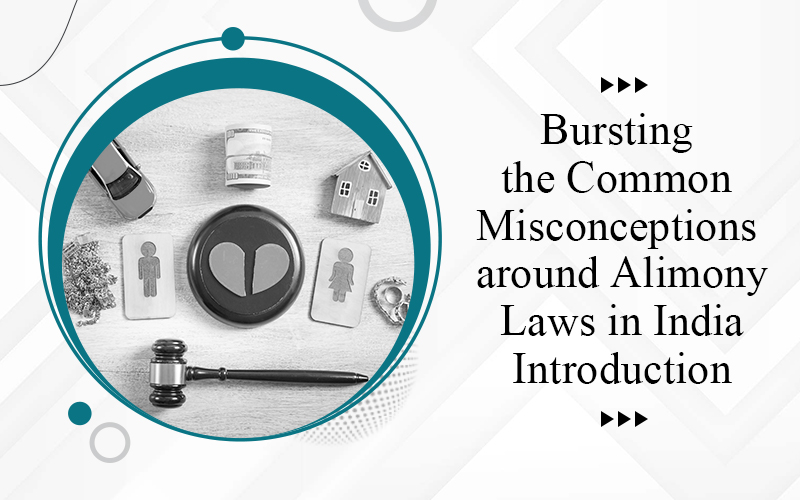
Alimony is one of the most misunderstood concepts of Indian matrimonial law. For many women, alimony provides necessary financial security after a separation. For others, it represents a right to maintain dignity and stability after contributing years to a marriage, so that they do not go destitute. Legally, alimony is designed to ensure that the financially dependent spouse is not led into hardship due to the end of the marriage.
In India, alimony laws differ depending on the religious community of the couple. Personal laws of a religious community come into play. The Hindu Marriage Act, 1955, governs Hindus, while Muslims come under the Muslim Women (Protection of Rights on Divorce) Act, 1986. Christians follow the Indian Divorce Act, 1869, and those who marry under the secular Special Marriage Act, 1954, are covered accordingly. However, Section 125 of the Criminal Procedure Code (CrPC) acts as a universal safeguard for all women, regardless of religion, as held by the Hon’ble Supreme Court of India in Mohd. Ahmad Khan v. Shah Bano Begum [1985]. This was a much-needed and controversial judgment at that time, which benefited many women from becoming destitute.
Bursting the myth
Despite the clarity in statutes, numerous misconceptions continue to surround alimony, particularly regarding women’s entitlement to the payment. One of the most prevalent myths is that alimony is automatically awarded after divorce. This is not true. Alimony must be specifically sought by filing a petition in the appropriate court, and the court will decide based on multiple factors. The court also considers the conduct of the parties, though fault-based considerations are secondary to financial ones.
One such myth that has persisted through the years, and is becoming stronger by the day due to widespread misinformation on social media, is that only husbands are obligated to pay alimony. But in reality, Indian courts have increasingly acknowledged that wives earning significantly more than their husbands may also be required to pay maintenance and support them, especially if the husband is incapacitated or unable to support himself, and courts have also pointed out how a qualified, educated woman must earn after divorce and not only rely on the alimony. This myth might come from the fact that in India, married women are unemployed or financially dependent on their spouse, which automatically makes the husband pay alimony after divorce.
The process of alimony involves either mutual agreement between the spouses or the final decision is made by the court. In mutual divorces, parties agree on a lump sum amount to avoid future disputes. In other cases, the court may fix a specific monthly amount considering elements as outlined by the Supreme Court in a 2024 ruling, such as the length of the marriage, age, and health of the parties, dependents and their responsibility, income of both parties, reasonable needs, lifestyle enjoyed during the marriage, their conduct during marriage and litigation, and lastly, prior or existing liabilities, if any. These eight are the guiding factors for the court in deciding the sum of alimony. This ensures fairness over time and adapts to life changes that affect either party’s ability to pay or need for support. Demanding and receiving are two different concepts. A party doesn’t often receive the same amount of alimony as demanded by them. The court holds the final decision after deep contemplation.
In many high-profile cases, wives may demand crores of rupees as alimony, but that does not mean the court grants that amount. Indian courts often cut down large claims to realistic amounts supported by evidence and the capacity of the other party to pay. The burden of proof lies on the claimant to show why the demanded amount is justified. Demanding a large figure may be part of a negotiation tactic, but it must be backed by actual reasoning and evidence. The narrative that a woman can make “unjustified” demands and ruin a man’s life is exaggerated by miles.
Conclusion
Alimony in India is not a tool for punishment but is designed to ensure post-marital financial fairness. It tries to offer both parties to rebuild their lives after a marriage ends. It should not be seen as evil, especially by men who think women want the whole of their property after marriage, and alimony is only based on entitlement. The judiciary always tries to be competent and fair, and balance the needs of both parties.