Cyrus Noshirwan Kartak Vs. State of Maharashtra and Anr.
WRIT PETITION NO.5770 OF 2025
(SJB, Before N.J. Jamadar, J.)
Overview
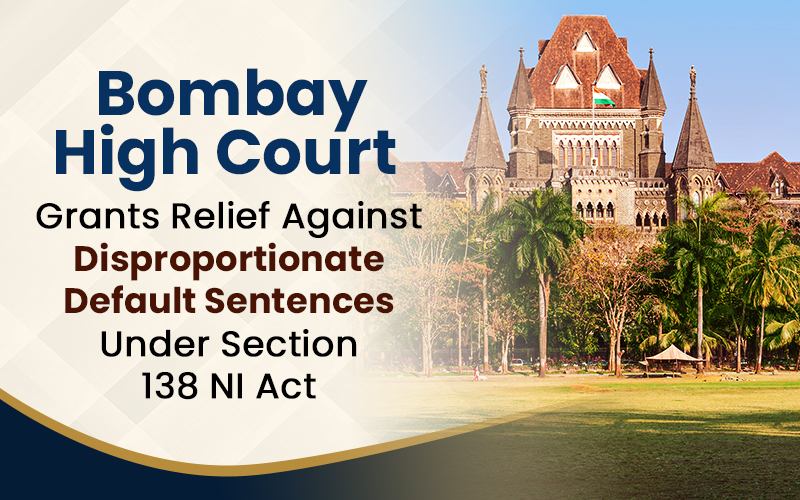
The Bombay High Court in this matter dealt with a petition filed by the petitioner, challenging the manner in which sentences were imposed in various cheque dishonour cases under Section 138 of the Negotiable Instruments Act 1881 (herein referred to as the NI Act).
Seventeen separate complaints were filed against the petitioner which arose from dishonoured cheques issued towards a commercial liability. Even though it was directed by the trial court to run the substantive sentences concurrently, it was ordered that the default sentences for non-payment of the compensation would run consecutively. This led to the petitioner facing a very lengthy period of imprisonment.
The High Court had to examine whether imposing such a sentence was legally sustainable and whether it caused violation of the right to personal liberty under Article 21 of the Constitution.
Facts of the Case
It was alleged by the complainant that goods worth nearly ₹22.68 crores were supplied to Mintaur Engineering Private Limited. Towards the repayment of the same, 60 cheques were issued on the company’s behalf.
However, in July 2014, when the cheques were presented, they were all dishonoured.
Following the same, on 12 September 2014, 17 separate complaints were filed by the complainant before the Metropolitan Magistrate under Section 138 of the NI Act.
Cyrus Noshirwan Kartak, the petitioner herein was convicted in all the complaints. The petitioner was sentenced to 15 months of simple imprisonment in all the cases along with the payment of compensation. It was further directed by the court that the substantive sentences would run concurrently and the default sentences for the failure to pay compensation would run consecutively.
Due to the same, the petitioner faced several additional years of imprisonment only on one account i.e., non-payment of compensation. This was challenged by the petitioner before the Sessions Court through 17 separate appeals and on 17 January 2025, all of these appeals were dismissed, and the order of the Magistrate was upheld.
Aggrieved by the same, the petitioner approached the Bombay High Court through the current writ petition.
Legal Issues
- Whether increased imprisonment arising from consecutive default sentences violates Article 21 of the Constitution.
- Whether separate prosecution arising from dishonoured cheques connected to the same transaction is legally permissible.
- Whether a Magistrate has the power to impose 12 months default imprisonment when it comes to cheque dishonour cases under Section 138 of the Negotiable Instruments Act.
- Whether default sentences for non-payment of compensation could run consecutively.
Decision
The petition was allowed by the Bombay High Court and the sentences imposed upon the petitioner were modified. The Court held that as per Section 65 of the Indian Penal Code, imprisonment upon the default of payment of fine cannot exceed one fourth of the maximum punishment prescribed for the offence.
Since Section 138 of the NI Act provides for a punishment of maximum two years, the sentence in each complaint could not exceed the period of six months. Therefore, the direction of the Magistrate imposing 12 months default imprisonment in each case was unjustified and illegal.
It was further clarified by the Court that default sentences are different from substantive punishment and cannot run concurrently. However, enforcing consecutive default imprisonment in the current scenario would result in a shockingly disproportionate incarceration for what was originally a financial liability. The Court noted that the petitioner had already undergone more than nine years of imprisonment, including remission.
The High Court modified the default sentence in all the 17 complaints to the period already undergone while holding that further detention would be contrary to Article 21 and directed the release of the petitioner immediately.