ELECTROSTEEL STEEL LIMITED (NOW MS ESL STEEL LIMITED) [APPELLANT(S)] Vs.
ISPAT CARRIER PRIVATE LIMITED [RESPONDENT(S)]
CIVIL APPEAL NO. 2896 OF 2024
(2JB, ABHAY S. OKA and UJJAL BHUYAN JJ., delivered by ABHAY S. OKA J.)
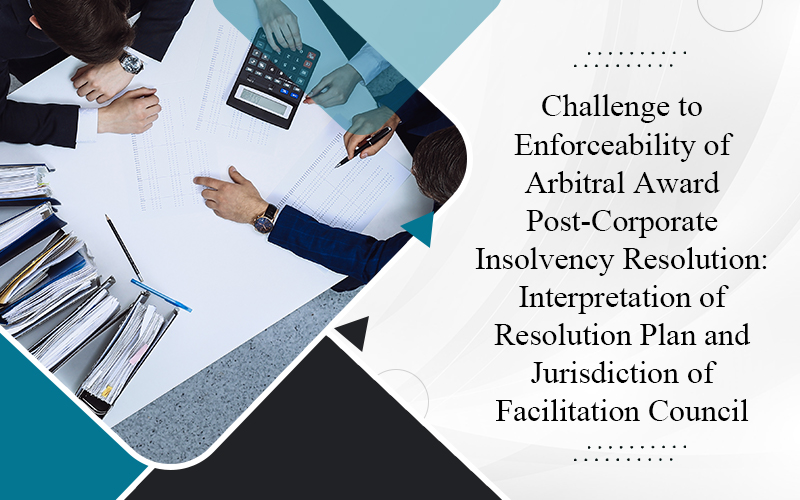
This appeal challenges the Jharkhand High Court’s judgment dated 17.07.2023, which dismissed the appellant’s petition under Article 227 of the Constitution. The appellant contested the execution of an arbitral award passed by the West Bengal Micro, Small and Medium Facilitation Council in favor of the respondent for Rs. 1.59 crore. Although the appellant underwent insolvency proceedings and a resolution plan was approved by the NCLT in 2018 settling operational creditors’ claims at nil, the Facilitation Council resumed arbitration after the moratorium ended and passed an award. The appellant argued that the claim stood extinguished post-resolution plan approval. The High Court held that the Facilitation Council retained jurisdiction, and the arbitral award was executable. The appellant contends that the High Court misinterpreted the resolution plan and that the respondent’s claim, settled at nil, cannot now be enforced. Reliance is placed on key Supreme Court judgments to support the appellant’s stand.
The learned senior counsel argued that allowing operational creditors to pursue individual claims after a corporate insolvency resolution process (CIRP) would defeat the purpose of the Insolvency and Bankruptcy Code (IBC), especially when their claims were settled at nil under an approved resolution plan. Referring to Adani Power Ltd. v. Shapoorji Pallonji, it was submitted that an approved resolution plan is binding and cannot be challenged later except through the procedures under Sections 32 and 61(3) of the IBC. The Facilitation Council’s arbitration proceedings post-approval were termed null and void, lacking jurisdiction under Section 63 read with Section 238 of the IBC. Conversely, the respondent’s counsel argued that the claim was pending and acknowledged, thus proceedings revived after the moratorium. They contended that the award, unchallenged under Section 34 of the Arbitration Act, cannot be attacked in execution. Therefore, the High Court rightly dismissed the appellant’s objections.
The approved resolution plan can be challenged if it violates any law, involves irregularities by the resolution professional, neglects operational creditors’ debts, fails to prioritize insolvency resolution costs, or does not meet criteria set by the Insolvency and Bankruptcy Board of India (IBBI). Section 238 of the IBC ensures its precedence over conflicting laws. The Supreme Court has ruled that once a resolution plan is approved, all claims not included in it are extinguished, and no further proceedings for such claims can occur. The binding nature of the resolution plan was reinforced, including for operational creditors.
The resolution plan involves multiple parties, including the respondent, appellant, creditors, and the Facilitation Council. The buyer failed to appear in conciliation and arbitration proceedings. On 06.07.2018, the Facilitation Council determined the buyer owed Rs. 1,59,09,214.33. The respondent did not challenge the resolution plan.
The Executing Court dismissed the appellant’s plea to declare the award void. The High Court upheld the award’s enforcement but acknowledged limited grounds for challenging arbitral awards during execution. Ultimately, the Court ruled that the respondent’s claim was extinguished by the approved resolution plan, making the award non-executable.