M/S JSW STEEL LIMITED [APPELLANT(S)] Vs. PRATISHTHA THAKUR HARITWAL & ORS. [RESPONDENT(S)/ALLEGED CONTEMNOR(S)]
WRIT PETITION (CIVIL) NO.1177 OF 2020
(2JB, B.R. GAVAI and AUGUSTINE GEORGE MASIH JJ., delivered by B.R. GAVAI, J.)
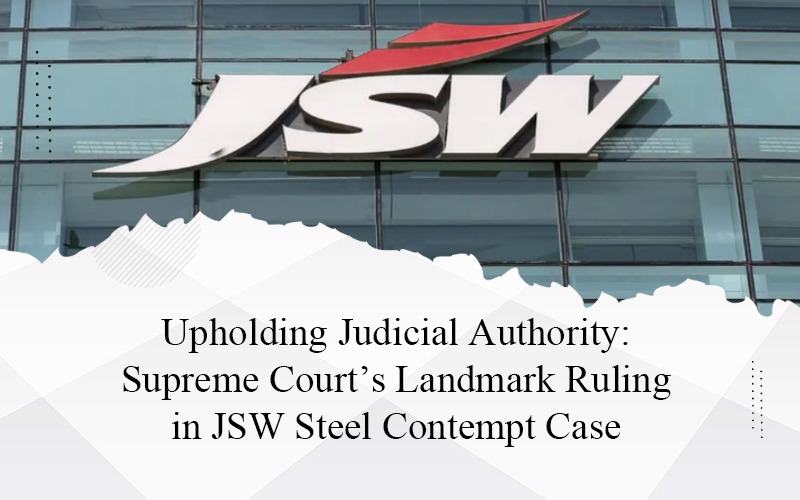
The Supreme Court of India recently delivered a crucial ruling in a contempt petition filed by JSW Steel Limited against Pratishta Thakur Haritwal & Others. The case arose due to deliberate and willful non-compliance with a previous Supreme Court judgment dated April 13, 2021. The petition was filed under Article 129 and Article 142 of the Indian Constitution, as well as Section 2(b) of the Contempt of Courts Act, 1971, seeking to uphold the authority of judicial orders.
The Supreme Court highlighted that failure to adhere to court judgments not only undermines the sanctity of the judiciary but also threatens the democratic framework of the country. Article 129 empowers the Supreme Court to punish for contempt, ensuring that its rulings are enforced effectively. Additionally, Article 142 grants the court the authority to issue any orders necessary for complete justice. The case also falls under Section 2(b) of the Contempt of Courts Act, 1971, which defines civil contempt as willful disobedience of court orders.
By invoking these provisions, the Supreme Court reaffirmed its role as the guardian of judicial integrity, ensuring that its decisions are respected and implemented. The court’s strict stance in this case serves as a warning that judicial directives must be followed without exception. Legal experts regard this ruling as a landmark judgment with significant implications for corporate accountability. The Supreme Court’s emphasis on the sanctity of judicial decisions sends a strong message to corporations, government bodies, and individuals, reinforcing the need for strict adherence to legal mandates.
The court also referred to past precedents where contempt proceedings were used to enforce compliance, demonstrating its commitment to ensuring that justice is not only delivered but also effectively executed. The ruling underscores that no entity, regardless of financial power or influence, is above the law. This case highlights the increasing importance of corporate responsibility in India’s evolving legal landscape. As businesses expand their influence, their legal obligations become more significant. The Supreme Court’s decision in this matter reinforces the expectation that companies must comply with legal and judicial directives without delay or resistance.
Legal scholars believe this ruling will serve as a precedent for similar cases in the future, ensuring that businesses and individuals respect court decisions. By upholding justice and accountability, the Supreme Court has demonstrated its commitment to strengthening the rule of law and protecting the integrity of the judiciary. The Supreme Court’s verdict in JSW Steel Limited vs. Pratishta Thakur Haritwal & Ors. marks a significant step in enforcing judicial compliance and reinforcing corporate accountability. The ruling highlights the power of the judiciary in ensuring that court decisions are implemented, emphasizing that non-compliance will not be tolerated.
By taking a firm stand, the Supreme Court has reinforced the principles of justice, fairness, and legal adherence, setting a precedent for future cases involving corporate and individual compliance with judicial orders.