IN RE: RIGHT TO PRIVACY OF ADOLESCENTS
SUO MOTU WRIT PETITION (C) NO. 3 OF 2023
(2JB, Abhay S. Oka and Ujjal Bhuyan JJ., delivered by ABHAY S. OKA, J.)
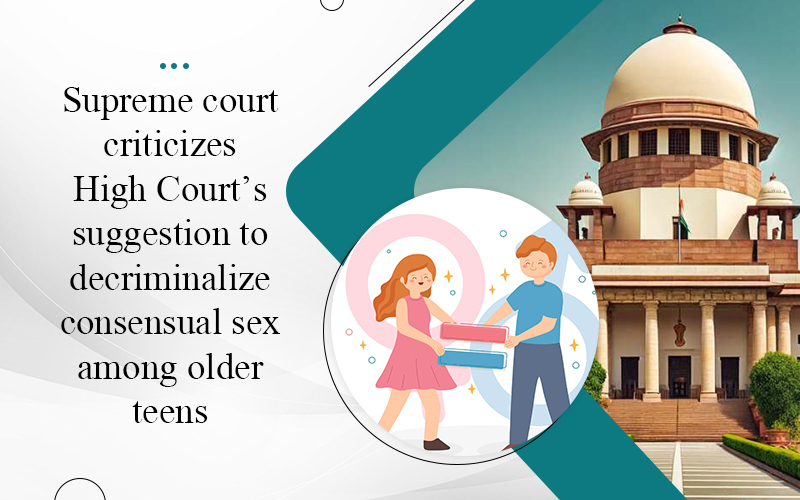
On August 20, 2024, the Supreme Court of India overturned the controversial judgment of the Calcutta High Court delivered on October 18, 2023. The case in question was a suo motu proceeding titled In Re: Right to Privacy of Adolescents. The Calcutta High Court’s judgment had drawn criticism for its remarks regarding the sexual behavior of adolescents. The High Court’s observations were seen as controversial and problematic, particularly in the context of adolescent rights and privacy.
Criminal Appeal No. 1451 of 2024 challenged the Calcutta High Court’s judgment from October 18, 2023. The Special Judge had convicted the accused under Section 6 of the POCSO Act and Sections 363 and 366 of the IPC, sentencing him to twenty years’ rigorous imprisonment for POCSO Act violations and lesser terms for IPC offenses. No separate punishment was given for IPC Section 376 due to the POCSO Act sentence.
The Supreme Court, comprising Justices Abhay S. Oka and Ujjal Bhuyan, set aside the High Court’s judgment. The Apex Court expressed strong disapproval of the remarks made by the Calcutta High Court concerning adolescent sexual behavior. The Supreme Court’s decision was driven by concerns that the High Court’s observations could negatively impact the privacy and rights of adolescents.
The Supreme Court emphasized the importance of safeguarding the privacy of adolescents, asserting that their personal and intimate matters should be treated with sensitivity and respect. The judgment explicitly disapproved of the High Court’s comments, which were deemed inappropriate and potentially harmful to the rights and dignity of adolescents. The Supreme Court’s decision reaffirms the need to uphold the fundamental rights of privacy and personal dignity for all individuals, including adolescents.
The court has found the accused guilty of offenses under sub-sections (2)(n) and (3) of Section 376 of the IPC and Section 6 of the POCSO Act. Sentencing will be decided after reviewing the committee’s report. This case highlights a failure in adhering to legal provisions, particularly sub-section (6) of Section 19 of the POCSO Act. The neglect of mandatory victim rehabilitation by all stakeholders, including the judiciary, has created an extraordinary situation. This oversight indicates a need for introspection and corrective measures at all levels to ensure compliance with legal requirements and proper support for victims.
The Supreme Court’s ruling sets a precedent in ensuring that the rights of adolescents are protected and that judicial remarks do not infringe upon their privacy or dignity. The judgment underscores the need for judicial sensitivity and awareness when dealing with matters involving the privacy and rights of minors.This decision may influence future legal and policy considerations related to adolescent rights and privacy, ensuring that such matters are handled with greater care and respect. Overall, the Supreme Court’s intervention highlights its role in protecting individual rights and ensuring that judicial pronouncements align with constitutional principles of privacy and dignity.