Introduction
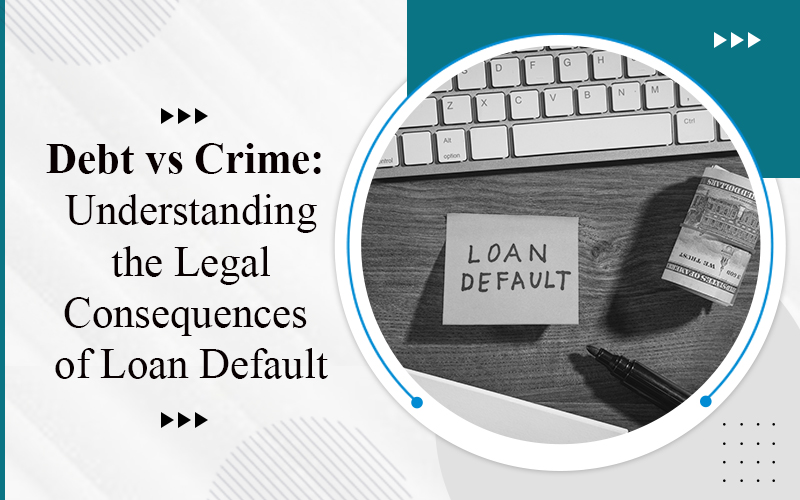
People generally believe that in India, not returning a loan may result in imprisonment. Many borrowers fear that if they default on a personal loan, home loan, credit card bill, or business funding, a criminal case may be brought against them. Nevertheless, such beliefs are largely a myth. Under Indian law, mere non-payment of a loan due to financial inability is treated as a civil liability and not a criminal offence.
Why Loan Default is a Civil Wrong
Loan agreements refer to contract law. Where a loan is issued to a borrower, a contractual relationship is formed between the lender and the borrower. If the borrower fails to repay, it amounts to a breach of contract under the Indian Contract Act, 1872. Breach of contract leads to civil remedies such as recovery suits, attachment of property, or other financial fines, not incarceration.
Banks and financial institutions usually practice the following civil recovery mechanisms
- Legal notice sending
- Arbitration initiation if the contract includes an arbitration clause
- Filing a civil recovery suit
- Proceedings under SARFAESI Act (for secured loans)
- Declaring the borrower as a wilful defaulter only under the RBI framework
- Reporting defaults to credit bureaus – CIBIL, Experian, etc.
None of these automatically involves criminal proceedings. When Loan Default Can Become a Criminal Matter. Although loan default is civil in nature, it can turn into a criminal case if there is evidence of fraud, misrepresentation, or criminal intent at the time of borrowing.
Criminal liability may arise under the following
- Sec. 420 IPC (Cheating)
- Section 406 IPC (Criminal breach of trust)
- Section 468/471 IPC (Forgery/False documents)
In such cases, the action is not merely nonrepayment; it is fraud or deceit. Criminal intent must be present from the outset-the legal principle of mens rea.
Cheque Bounce Exception
The important difference lies in Section 138 of the Negotiable Instruments Act, 1881, which criminalises cheque dishonour for insufficient funds. In case of a borrower issuing a cheque, the legal consequences of a check issued for loan repayment that bounces include fines or imprisonment. Even in such cases, however, imprisonment is rare and applied only in cases where the borrower disobeys legal notices and court orders.
Conclusion
Loan repayment is a serious financial responsibility; defaults affect one’s credit. score, ability to borrow in future and may lead to legal proceedings. However, the inability to pay is not a crime. Indian law protects borrowers from imprisonment purely for a financial default, unless fraud or cheating is involved. The legal principle is clear: “Debt is civil, fraud is criminal.”